
The Truth About Marilyn?
Nobody knows, including James Patterson...

Is there anything we don’t know about Marilyn Monroe?
Author James Patterson is hoping we know nothing. Otherwise, his new book, a readable rehash of the well-known saga, is nothing but a pretty bauble on sale for the recent holidays.
Written with an assist from British author Imogen Edwards Jones, the book comes from Little Brown and Company, an offshoot of the Hachette Book Group, one of the last mastodons of traditional publishing houses. Glaring at you from the cover is a classic black and white shot of Marilyn, while in raised gold lettering we read: THE LAST DAYS OF MARILYN MONROE: A True Crime Thriller.
The packaging suggests this is a special book, what might’ve been called at one time, “event publishing,” with an iconic American pop culture legend being presented by a big-time author, a fellow whose bio assures us is “the most popular storyteller of our time.” I have heard this about Patterson before, and it always reminds me of those old infomercials about Slim Whitman, the yodeler, who supposedly told sold more records than The Beatles.
Reading Patterson’s new Marilyn book made it clear why he’s so popular - he is the modern equivalent of Classics Illustrated, those cheaply made comic books of the 1950s and ‘60s that introduced kids to classic literature. If A Tale of Two Cities was too long, any glue-sniffing, pimply-faced tenth grader could sit with the Classics Illustrated edition in the school cafeteria and get the gist of it in time for seventh period English. And now, Patterson recreates Marilyn for a reading audience that might not want the Joyce Carol Oates version, or the Norman Mailer version. He gives the gist, and nothing but the gist.
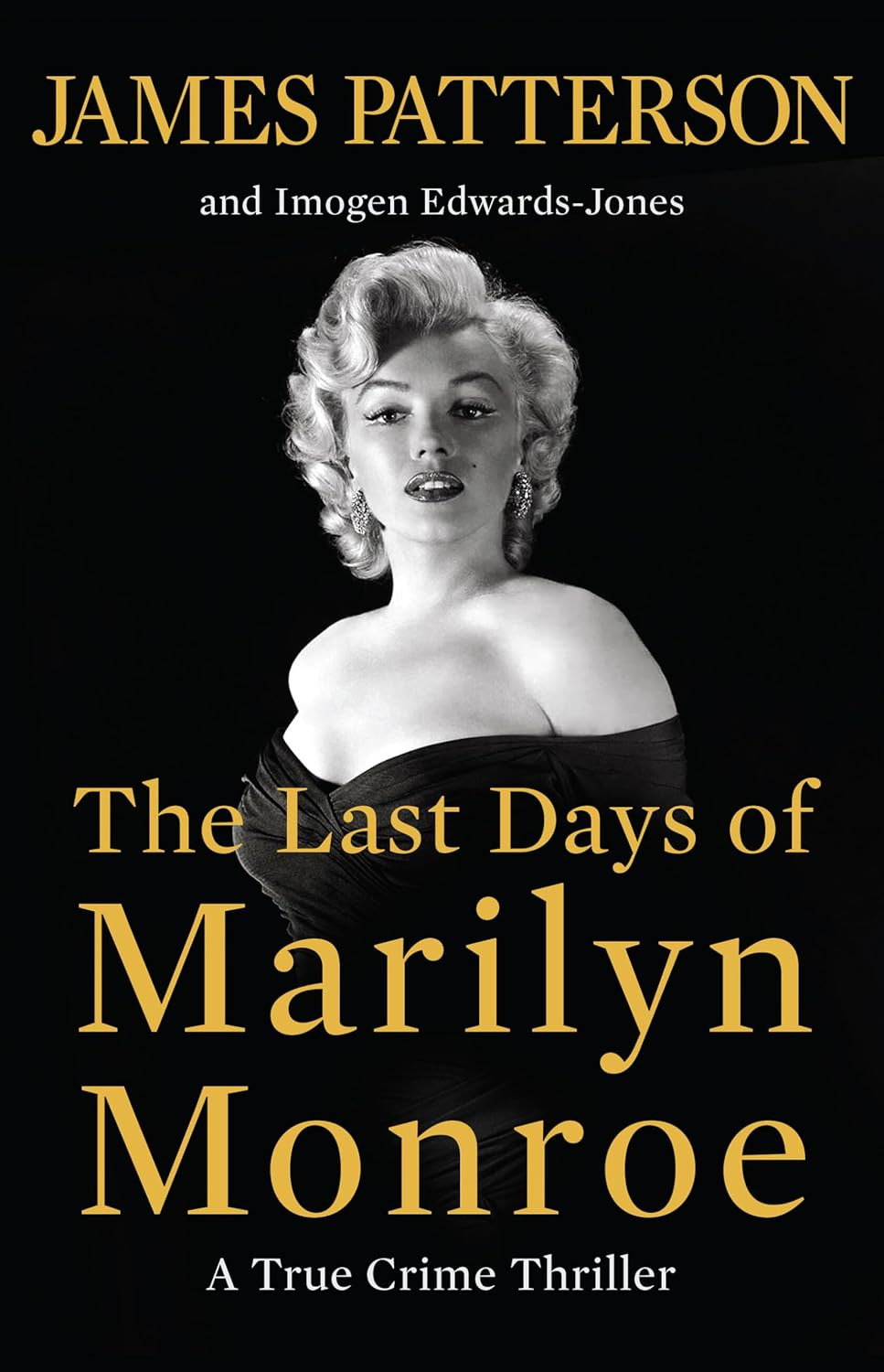
In a style so breezy I needed a sweater to read it, he skates across the surface of Marilyn’s story as if writing for an audience of fidgety 15-year-olds, a group that won’t even notice Marilyn’s Bust Stop costar Don Murray is referred to as “Bill Murray.” But while I appreciate Patterson’s breakneck method, I was not always sure what I was reading.
Though the cover promises a “true crime thriller,” it’s just a traditional biography written in the same airy style as Patterson’s recent books on John Lennon and Aaron Hernandez. I’d been half-hoping Patterson came up with a new scoop - Maybe Bobby Kennedy accidentally killed Marilyn during a rough game of “Spank me, Mr. Attorney General” - but Patterson isn’t interested in such things. He has a cookie-cutter formula, not too dissimilar from those cheesy biographies by Bill O’Reilly. Want more confusion? Readers learn on the copyright page that this “true crime thriller” is a work of “fiction.” Huh?
True, not true, The Last Days of Marilyn Monroe is enjoyable, if somewhat dry. And even if Marilyn is presented here as a vague, unknowable stick figure, Patterson gives us just enough to imagine what she may have been like: she’s nice at first, then she’s unbearable, then she’s dead. Classics Illustrated couldn’t have told the story with more economy.
One key scene follows another, and each one ends with Marilyn upset. The message is clear: she was a sad young woman. She had daddy issues. Men were mean to her.
Worse, just about every man she meets, from Kruschev to Kennedy, is a leering creep. Though she’s smart enough to know most of these mouth-breathers are jerks, she’s ill-equipped to survive in a jungle of possessive men, lesbian acting coaches, and manipulative doctors. Sickly, vulnerable, with a sense of self-esteem as fragile as wax-paper, and an apparent death wish that was always bubbling just under her bubbly surface, Marilyn’s life played out the only way it could have. With an insane mother, an absentee father, and a profound lack of her own identity, was there any chance that things would turn out well for our girl?
The story is traditionally told as a Hollywood tale, but the reality is that Marilyn was troubled long before she was famous, back when she had dark hair and was posing nude for “gentleman’s magazines.” Prone to depression and thoughts of suicide years before Groucho Marx ogled her in Love Happy, the incandescent but neurotic Marilyn seemed to materialize like a mirage for postwar American males, a group not clear on where their newfound muscle and status would lead them, but certain that a well-stacked blonde was a good place to start.
They couldn’t have known their new sex idol was such a damaged personality, and they wouldn’t have cared. Behind the adoration was always a hint of dirty laughter - they’d seen her nude, her image hanging on gas station walls across America. She may have taken classes with Lee Strasburg, but they’d seen her nude.
Yet she had talent if anyone cared to take notice. “It’s like a hummingbird in flight,” said one of her acting mentors, “only a camera can freeze the poetry of it.”
And she could be a shrewd negotiator, once emerging from a year-long strike against 20th Century Fox with a multi-million dollar contract. She founded her own production company in 1955 and later, when she was a mumbling, paranoid ghost of herself, Marilyn negotiated a seven figure, two movie deal with Fox, all because she was angry that Liz Taylor was making more money than her.
These occasional flashes of strength and determination make Marilyn’s character more tragic, for no sooner would she stand up for herself then she would get sick on pills, or spin out of control while pining for some goof.
Second husband Joe DiMaggio is an intriguing character, an old-fashioned macho dummy who couldn’t handle Marilyn’s fame, yet he appeared to care about her. We also meet a few makeup men, photographers, and fringe players who seemed to genuinely care for Marilyn, though most of her friendships were short-lived.
Moreover, Marilyn is in and out of hospitals so often that we get an impression of her as one of life’s walking wounded. She was 36 when she died, but she’d lived a hard 36 years. Even if she’d survived that bleak night in 1962 when she finally lost the battle with whatever was torturing her, Patterson makes it clear that we would not see Marilyn as a bloated old-timer, navigating the new Hollywood of the 1970s. She was doomed for a bad ending, perhaps in an asylum, or on an operating table.
Patterson’s book isn’t perfect, but neither are any of the alleged 4,000 published titles about Marilyn. She’s been pawed over by the best and worst of writers, and she remains an enigma. If Paterson’s goal was a quick portrait of a famous woman in pain, he succeeded.